
Searching the Flushing Court Docket
Begin with MiCOURT Case Search. It posts a public case index and register of actions for participating courts. Pick the court before anything else. Then query by case number, or by name if you narrow it well. Before trusting a result as the right Flushing court record, match the court location, case type, filing date, parties, and status against what you already know. Treat the portal as informational; the court itself controls the official file.
For a Flushing traffic ticket or civil infraction, use the official ePAY ticket-search channel. Choose the county and court first. A search that returns nothing is common, and the reasons are usually mundane: the case sits in a different court, the category is restricted, the name is spelled differently, or the display simply omits it. When a Flushing result goes missing, call the clerk. Draw no conclusions from a blank screen.
- Select the court that fits the Flushing case type.
- Search MiCOURT by case number or a narrowed participant name.
- Use ePAY for an eligible Flushing ticket and the court on the citation.
- Read public case-history entries and settings as informational snapshots.
- Confirm the current Flushing service location by phone before a visit or deadline.
Flushing Court Records in Division 1
Under the 67th District Court assignment order, Flushing sits in Division 1. Clio, Montrose, and several named townships share that division. Think of it as a geographic map. It covers district traffic tickets, civil infractions, misdemeanors, limited civil cases, small claims, and related work. Division 1 appears on notices and ePAY contact listings. It helps a Flushing reader place the case correctly.
The label does not mean Flushing runs its own trial court. Circuit civil, criminal, family, and domestic cases stay with the 7th Judicial Circuit Court. That court takes them whenever circuit jurisdiction applies. Probate files live in a separate court and records office. Follow the named court and case type, never a city label by itself.
Flushing counted 8,411 residents in the 2020 Census QuickFacts. That number describes the city's population, nothing more. It says nothing about court workload.
Flushing Municipal Court Basics
Flushing has no separate municipal state trial court. Its traffic tickets, civil infractions, and district matters belong to the 67th District Court. That is the Division 1 assignment. A qualifying circuit case takes the circuit route instead. The city may keep its own governmental records. Those are not the court register or the court file.
The distinction matters most with a Flushing ticket. The issuing court printed on the citation controls the case history, the hearing date, the payment route, and any copy request. No local address or old community page can override the court name on the citation or the one the court portal returns.
Note: the Flushing court assignment can stay the same while the public-service counter moves after county consolidation.
Flushing Court Address: Verify First
Here is a conflict worth flagging directly. A Flushing Township page still says traffic fines are collected at 1415 Flushing Road. It also names a judge and magistrate. Later county materials tell a different story. The Flushing satellite facility was closed and vacated. Read the older page as legacy information, not as a working counter address.
The timeline is clear. A 2025 county memorandum called for closing the satellite by August 5, 2025. A 2026 county action on former court buildings confirms the building stood vacated. Call the court for the current location instead of visiting the legacy address. The county action is the newer operational source.
None of this means every older Flushing reference is wrong. It means you should date each source and weigh it against the later county action. The Division 1 assignment still works as a venue clue. The former building, though, is no longer a safe destination. Before setting out, ask the court. Ask whether the current service point handles public files and payment questions, or only a particular calendar function.
The Flushing Township source preserves the legacy reference. Check it rather than repeat it without question.
A Flushing court record search goes smoothest when three things line up: the online record, the division contact, and the current service location. If one disagrees, call before you go.
Court Dates and Settings in Flushing
A Flushing hearing setting is just that. It is a scheduled court event. You may find it in a public case history. For a circuit matter, use the 7th Circuit schedule and its date-oriented Court Display. It does not prove the hearing happened. It does not prove the case resolved, or that the court never reset the date. For same-day confirmation on a Flushing court date, call the court.
When you review a date, keep the case number, court, setting type, time, and room in one view. Dates get removed, continued, or moved. The city connection does not change. The court's current contact is the final word on attendance directions.
| Date | The Flushing setting date displayed by the selected court. |
|---|---|
| Time | The posted time or docket-call time. |
| Room | The room, courthouse, or other public location field when shown. |
| Judge | The judge, referee, or hearing officer identified by the case record. |
| Setting type | The scheduled event label, such as arraignment, hearing, conference, or trial. |
Flushing Court Docket: Search Then Confirm
Get the order right in Flushing. Search MiCOURT or ePAY first, then note the court plus the case or ticket number. Then call before you drive anywhere. A current record identifier beats an old building listing that may no longer mean much. The clerk can also tell you where a file sits: central, on-site, archived, or restricted.
The ePAY directory still lists legacy Flushing D67-1 at 810-659-5659. Treat that as a lead to verify before visiting. The satellite closure changed how things run in person. The central 67th District number in the assignment order is 810-424-4390. Central itself is listed at 810-257-3170.
Call when a Flushing record will not show online. The court can explain whether it is a district file, a circuit file, a probate matter, or a restricted category. The court can also say whether copies need a special process or a public terminal. One focused Flushing call does more than any address copied from an older page.
Current-location rule: A Flushing division assignment can remain valid after a facility move, so use the court contact to confirm where service is offered now.
Traffic Tickets in Flushing
Traffic tickets and civil infractions in Flushing belong to district court. The official Michigan ePAY ticket search takes a few search combos. You can search a few ways. Use last name with a ticket or case number, or last name with date of birth. Driver license plus state works too, and so does plate plus state after choosing the court. For a Flushing lookup, the ticket number is usually the cleanest field.
MiCOURT and ePAY answer different questions. MiCOURT gives public case history; ePAY finds eligible tickets and handles payment. Read the fine print. Paying through the portal counts as an appearance, waives a hearing, and admits responsibility. If a ticket never appears online, call the court. Flushing location details have shifted, so it pays to ask.
Flushing Ticket Records and Default
Michigan Court Rule 4.101 sets the civil-infraction framework for a Flushing citation. Ignore a ticket or skip a hearing and a default can follow. Trust the docket entry, not a vague online status. It shows what the court actually entered. It also shows which procedure applies. To set aside a civil-infraction default, the form is SCAO form CIA-04.
The Michigan traffic benchbook source explains when a court may hold reportable traffic convictions under advisement. It states how long the hold may last.
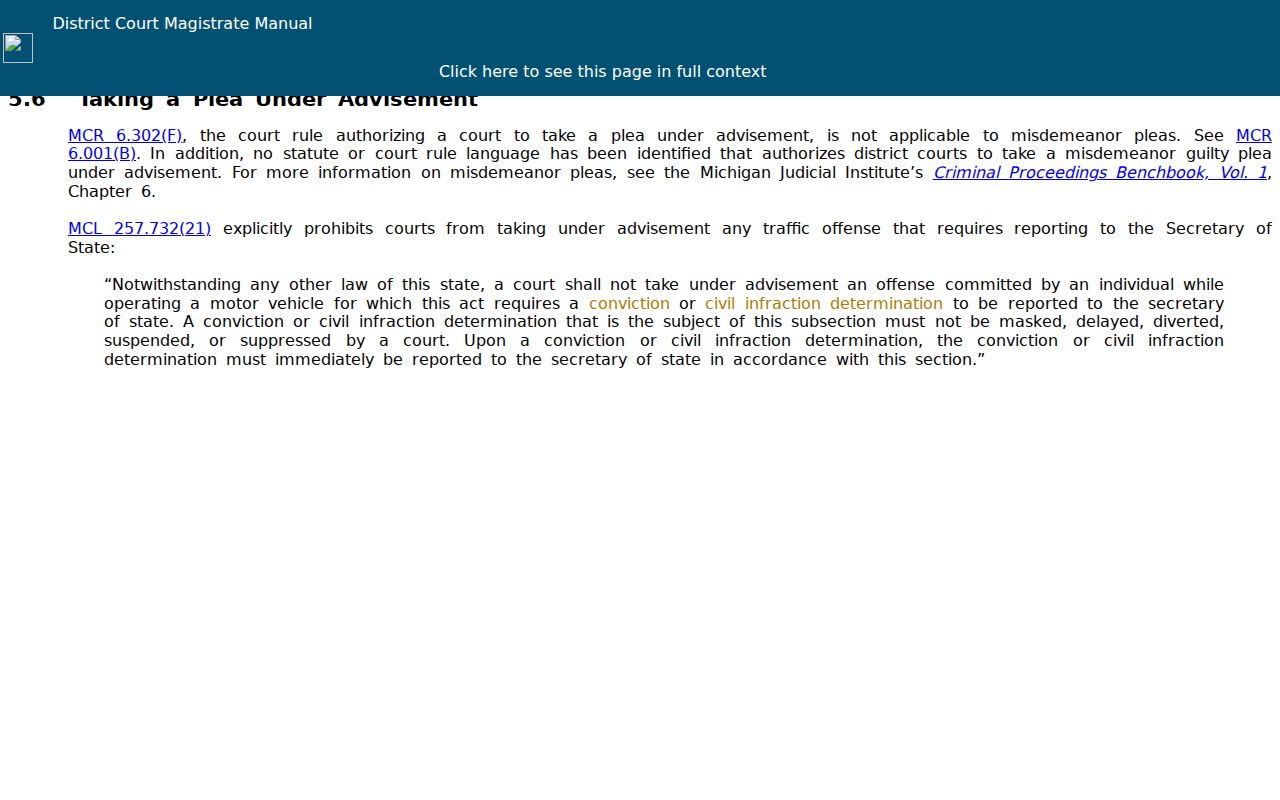
Check the court's own record first. A general traffic rule is no substitute for current procedure on your case.
The Michigan default-judgment source walks through the default process and the 14-day window after notice for filing a motion.
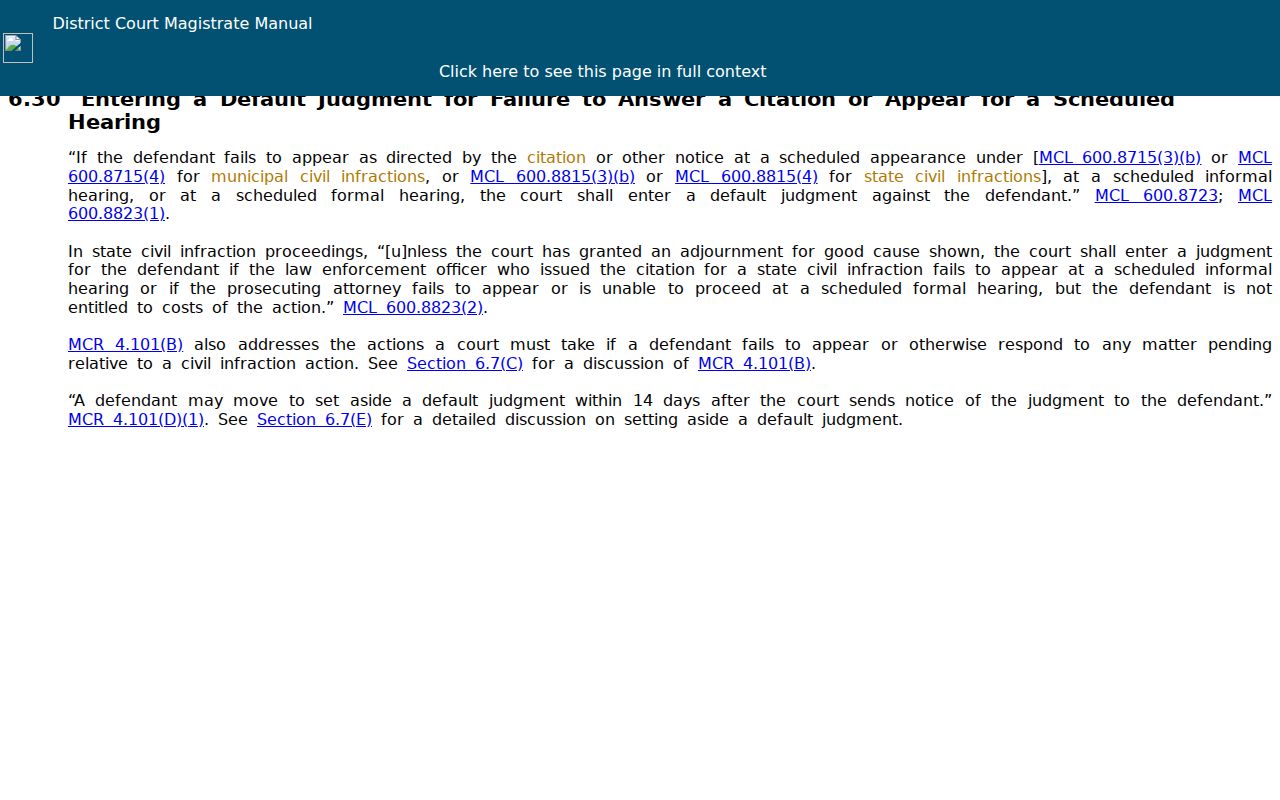
Before filing anything in a Flushing case, confirm the exact notice, deadline, and district-court procedure that apply to you.
Where Flushing Cases Go
Not every Flushing matter stays at the same level. District traffic, civil infractions, misdemeanors, limited civil work, small claims, and preliminary felony proceedings all sit with the 67th District Court. Felony trials, circuit civil cases, family matters, and domestic cases move up to the 7th Judicial Circuit Court when its jurisdiction applies. Probate records stay in a separate channel entirely.
Docket flow: Flushing district matter › 67th District Court Division 1 or Central › 7th Judicial Circuit Court when circuit jurisdiction applies
The city tells you where a case happened, but the court level tells you where the record lives. For the full Genesee County structure and access paths, see the Genesee County court docket overview.
Flushing Court Records by Mail
Mail is often the surer Flushing route. The official 67th District records request form asks a lot. It wants your details, the case number, and party names. Then it asks whether you want review, copies, a complete file, or one document. Request a complete file and the court can still withhold nonpublic material.
Send district requests by mail to 630 S. Saginaw Street, Flint, MI 48502. Or email them to 67THHELP@GENESEECOUNTYMI.GOV. Fax also works: 810-768-7912. Fees run $1 per page and $11 for certified copies. Ask about payment and pickup too. The form warns that unclaimed records can be disposed of after 30 days.
Gather a few things before you send anything from Flushing. Bring the court name, Division 1 or other division detail, case number, party names, and the exact document. That lets Records sort out whether the file is a district matter or belongs somewhere else. It also spares you a wrong turn. You won't treat the old Flushing address as the keeper of every district document.
Not sure a historic satellite address is still real? A mail, email, or fax request can be the most reliable way to get a Flushing record.
Flushing Court Record Access Rules
Access to Flushing public court records rests on court rules and the court of record. MCR 8.119 governs public records, registers, inspection, and copies. It promises neither an online document for every Flushing case nor public access to every case category.
Key Rules:
MCR 8.119 governs Michigan court-record access and reproduction.
MCR 1.109(F) protects personal identifiers that may need redaction.
MCR 4.101 provides the Michigan civil-infraction process, including hearing and default rules.
Flushing Court Docket Source Conflicts
A closed counter teaches a lesson about court information. An official page can be wrong about the details. Older municipal and township sites still carry weight, yet they lag behind a closure. Genesee County's newer 2026 former-court-buildings action confirms the point. It states that the Flushing satellite facility was vacated after the 2025 consolidation.
The state's own Michigan traffic notice source lays out the arraignment rules for misdemeanor traffic violations and appearance tickets. That procedural material sits behind the Flushing location warning.
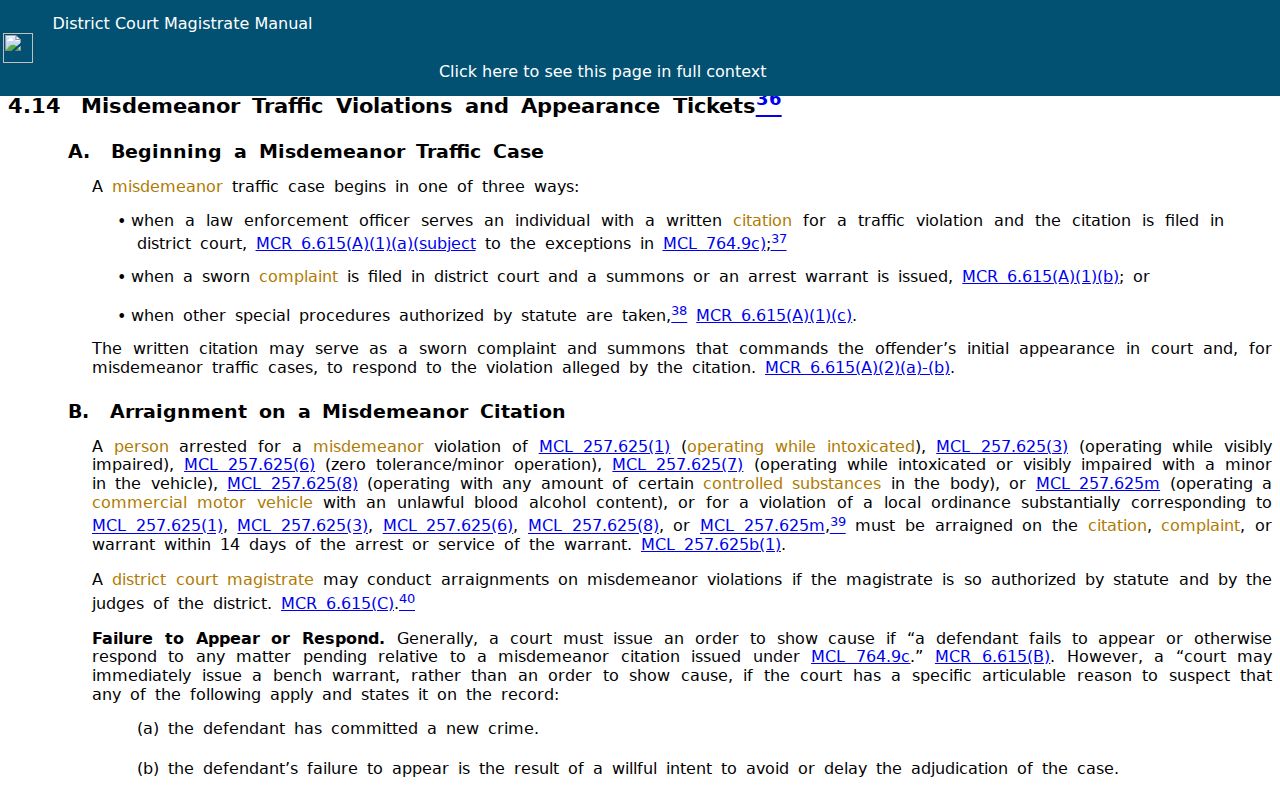
One caveat here: the linked page covers Michigan traffic procedure generally. It says nothing about a Flushing court counter that is open now. So call ahead before you go.
This Flushing example also teaches a useful lesson about docket research. An online court search and an in-person visit are two separate jobs. MiCOURT and ePAY can flag a Flushing case record or a traffic ticket. Neither one proves an old counter still serves walk-ins. A current hearing or a public terminal? A payment problem or a records request? For any of those, the court itself gives the real answer. Keep whatever it confirms next to your Flushing case number in your notes.